


Taking the Heat Off: Thermal Load and How to Reduce It

Prof Nat Waran
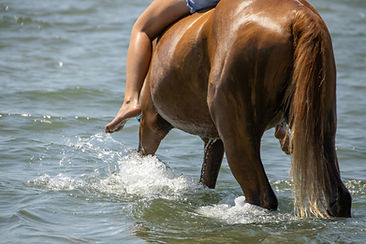
Cooling advice for horses has changed. Shade and clean water day to day, and if a horse does overheat, the most useful thing you can do is keep putting cold water on the whole horse, without stopping to scrape.
With a very strong El Niño building, many of us are heading into a spring and summer that could be hard on our horses. NIWA's latest outlook says El Niño has strengthened considerably since mid-winter, with its peak most likely in late spring or early summer, and it is likely to be one of the strongest in recent history. The north and east of the North Island are most likely to be warmer and drier than usual, and for those of us in Hawke's Bay, NIWA flags the potential for short, notable warm spells with high winds. This guide explains what thermal load is, how to judge a hot day, what we can do to reduce the load on our horses, and what current research says about cooling a horse that is getting too hot, including how to do it when water is in short supply.
1. What Is Thermal Load?
Thermal load is the total heat a horse has to deal with. Some of it comes from inside: every horse produces heat simply by being alive, digesting its feed and, above all, working its muscles. The rest comes from outside, from direct sun, hot air and hot ground.
To stay well, a horse has to lose heat as fast as it gains it, and the skin is where most of that exchange happens. Sweat only cools when it evaporates, so humid, still air is the real problem. When the air is already damp and nothing is moving, sweat has nowhere to go.
A useful early warning sign is sweat running off the horse rather than drying (evaporating), together with skin that feels hot to the touch.
2. Judging Heatload
A common rule of thumb, used by the University of Minnesota Extension among others, is to convert the air temperature to Fahrenheit (multiply the Celsius figure by 1.8 and add 32), then add the relative humidity.
How Temperature (°F) Plus Humidity (%) Affects Cooling | |
Under 130 | Cooling works well |
130 to 150 | Cooling is less efficient |
Over 150 | Cooling is greatly reduced |
Over 180 | Can be fatal for a horse under stress, such as a horse being worked |
It is a useful screen, but only a screen. A 2026 review for vets points out that no single number, including the wet bulb globe temperature used in many equestrian hot weather policies, reliably tells you how much strain a particular horse is under. A muggy 27°C day at 75% humidity scores 156. A scorching 33°C nor'wester at 30% humidity scores only 121, yet a dark horse standing in full sun that afternoon is still carrying a heavy load. Use the number, check the forecast, and above all watch your horse.
3. Reducing the Load for Horses Living Out
Shade is essential
When University of California researchers kept horses in fully shaded or fully unshaded pens through a hot, sunny summer, the horses without shade had higher rectal and skin temperatures and breathed faster. The NZ Code of Welfare: Horses and Donkeys expects horses to have access to shelter from the sun, with natural shade or shelters large enough for all of them, and closer monitoring when temperatures are extreme. Fly control helps too, because a horse stamping and moving about all afternoon gets hotter!
Plenty of Clean Water
Horses drink far more in hot weather, and hydration affects how well a horse copes with heat. When it comes to water it is worth remembering to:
• Keep troughs clean and full.
• Put water in the shade if you can.
• Always offer plain water alongside any electrolytes.
Rugs Off, or as Light as Possible
If fly protection is genuinely needed, choose light coloured, open mesh.
Think About the Feed you provide
Fermenting fibre in the hindgut produces heat. Never cut back on fibre, because the gut depends on it, but consider feeding more of the hay in the cooler evening and overnight. If a horse needs extra energy, oil is the coolest source, because fat produces less heat than fermentable fibre or grain.
Horses at Higher Risk
Fitness, body condition, hydration and how used a horse is to the heat all affect its risk. Keep a closer eye on:
• Overweight horses.
• Unfit horses, and horses not yet used to hot weather.
• Any horse that does not sweat properly, which needs veterinary advice.
4. Riding in the Heat
• Ride early in the morning or late in the day.
• Shorten and lighten sessions on hot days.
• Choose grass over sand arenas or tarmac where you can. Grass reflects very little of the sun's heat, whereas arena surfaces and tarmac throw a lot of it back.
Horses can acclimate to heat. In a UK study, 15 days of regular exercise in hot, humid conditions produced clear improvements in how horses coped, which means the first hot spell of spring, before horses have adjusted, can be the riskiest.
Exertional heat illness is not purely a hot weather problem. Hard work generates heat, and some horses are affected even on comparatively cool days.
5. Cooling a Hot Horse: What the Research Now tells us
This is where advice has changed, and we need to take this on board:
Put the Scraper Down
The studies that have tested scraping found no benefit from it. In a small University of Queensland trial, horses doused with iced water and left wet cooled slightly more than when the water was scraped off between buckets, A Japan Racing Association study found the same trend. The 2026 review for vets describes scraping as outdated and no longer recommended: keeping the water coming carries warmed water away from the skin, and every pause to scrape is time not spent cooling.
Contrary to previous beliefs, a wet horse won’t heat up. When UK researchers cooled hot horses with iced water and did not scrape between applications, their temperatures kept falling.
Keep the Water Coming
In the Japanese study, the fastest cooling came from standing horses under a continuous shower of ordinary tap water, even at 26°C, which beat intermittent water at 10°C. Keeping water on the horse without a break matters more than how cold it is. Colder water still removes heat faster, and racing vets in Australia and Hong Kong note that iced water gives the most rapid cooling of all, so use the coldest you have, but never delay starting while you look for it.
Cover the Whole Horse
Cooling works through the fine blood vessels right across the skin, so the more skin you wet, the faster the horse cools. Concentrating on the neck and the insides of the hind legs is a myth. In a study of 42 event horses in hot, humid conditions, cold water over the entire body cooled them faster than tepid water applied to selected areas.
Cold Water on Hot Muscles Is Safe
Despite previous beliefs, blood tests found no muscle damage in any of the horses cooled with cold water.
Shade, Moving Air and a Drink
You don’t need to keep walking a hot horse. In the Japanese study, the methods that involved walking the horse cooled it more slowly than standing it under a shower. However, fans help, even on humid days. There is no reason to withhold water from a hot horse, so offer cool water freely and monitor intake.
Know When to Stop, and When to Call the Vet
A normal resting temperature is around 37.5 to 38.5°C. Keep cooling until breathing has settled and the temperature is moving back towards normal; vets aim to achieve this within about 30 minutes. Then keep checking for some time afterwards, because heat stored deep in the body can move back out and the horse can heat up again.
Ring your vet straight away, while someone else keeps cooling, if the horse:
• Is not clearly improving.
• Is wobbly or uncoordinated.
• Is headshaking, kicking out oddly or behaving strangely.
• Has stopped sweating, or is hot with dry skin.
6. Cooling When Water Is Short
Many rural properties rely on tank or bore water, and NIWA expects many regions to see reduced rainfall and more frequent dry spells this spring.
A Horse That Is Genuinely Overheating
This needs speed. The Queensland cooling routine used 30 litres of iced water every minute for six minutes, about 180 litres in all. So plan now:
• Know where that amount of water would come from.
• Keep full buckets or a drum in the shade on hot days.
• Have ice made in the freezer.
• If a hose has been lying in the sun, run the first flush into a bucket, because the water sitting in it can be very warm.
Consider this: Before the first hot day, walk through what you would do if your horse overheated. Where is the nearest hose or full bucket? Is there shade and a fan within reach? Who would you ring, and who would keep cooling while you did?
7. Quick Guide
Situation | What Is Happening | Priority Action |
Hot, still or muggy day | Sweat cannot evaporate well | Shade and water; ride early or late, or not at all |
Warm day, after an ordinary ride | The horse is usually cooling itself | Sponge the sweaty areas; shade and a breeze |
Horse overheating | Heat is building faster than it can be lost | Shade and moving air; continuous cold water over the whole body; no scraping |
Not improving, wobbly, behaving oddly or not sweating | Possible heat illness | Keep cooling and ring the vet straight away |
This article is general information. Talk to your vet about a heat plan for your horse.
References and Further Reading:
Brownlow, M. and Mizzi, J.X. (2023). An overview of exertional heat illness in Thoroughbred racehorses: pathophysiology, diagnosis, and treatment rationale. Animals 13(4), 610.
Colgate, V. and Mackenzie, C. (2026). Understanding and preventing exertional heat illness in horses. Vet Times 56(27), 12-15.
Earth Sciences New Zealand (NIWA) (2026). Seasonal Climate Outlook September to November 2026.
Holcomb, K.E., Tucker, C.B. and Stull, C.L. (2013). Physiological, behavioral, and serological responses of horses to shaded or unshaded pens in a hot, sunny environment. Journal of Animal Science 91(12), 5926-5936.
Janczarek, I. et al. (2022). Effect of different water cooling treatments on changes in rectal and surface body temperature in leisure horses after medium-intensity effort. Animals 12(4), 525.
Kang, H., Zsoldos, R.R., Skinner, J.E., Gaughan, J.B., Mellor, V.A. and Sole-Guitart, A. (2022). The use of percutaneous thermal sensing microchips to measure body temperature in horses during and after exercise using three different cool-down methods. Animals 12(10), 1267.
Kronfeld, D.S. (1996). Dietary fat affects heat production and other variables of equine performance, under hot and humid conditions. Equine Veterinary Journal Supplement 22, 24-34.
Marlin, D. Horses, heat, sweating, cold-water, cooling and scraping. AskAnimalweb.
Marlin, D.J. et al. (1998). Post exercise changes in compartmental body temperature accompanying intermittent cold water cooling in the hyperthermic horse. Equine Veterinary Journal 30(1), 28-34.
Marlin, D.J. et al. (1999). Physiological responses of horses to a treadmill simulated speed and endurance test in high heat and humidity before and after humid heat acclimation. Equine Veterinary Journal 31(1), 31-42.
Martinson, K. et al. (reviewed 2024). Caring for horses during hot weather. University of Minnesota Extension.
Ministry for Primary Industries (2018). Code of Welfare: Horses and Donkeys.
Takahashi, Y., Ohmura, H., Mukai, K., Shiose, T. and Takahashi, T. (2020). A comparison of five cooling methods in hot and humid environments in Thoroughbred horses. Journal of Equine Veterinary Science 91, 103130.
Williamson, L. et al. (1995). Comparison between two post exercise cooling methods. Equine Veterinary Journal 27(S18), 337-340.


Comments